Turkle
One Flew Over the Cuckoo's NestTurkle is the ward’s night attendant, a seemingly drowsy but consequential presence in the events surrounding McMurphy’s midnight gathering. He helps arrange access for Billy Bibbit’s visitor, tolerates the patients’ attempts to enter the drug room, and becomes central to Dale Harding’s proposed escape plan. His story turns on an uneasy balance: he cooperates with the patients, but remains an employee under a supervisor’s scrutiny, with limited control over the ward’s keys and routines.
Identity and Position
Chief Bromden introduces Turkle as an old attendant coming on shift at midnight, after Geever, another aide, and the nurse go off duty. Turkle wears a white suit; Bromden describes his bald, yellow head bobbing and seeming almost to float at the end of his neck. He nods through McMurphy’s preparations and appears close to falling asleep. Bromden has heard that Turkle also works days at a racetrack, a detail that may help explain his fatigue but is presented as hearsay, not confirmed biography.
Turkle’s position gives him access to the ward during the night, but not command of its entire operation. When the supervisor comes looking for him, he has to answer for the lights and account for his work. Later, he tells McMurphy that the supervisor is the only person on nights with a key to the drug room. His authority is therefore practical but bounded: he can help make arrangements, yet he cannot simply open every door or act without regard to the person supervising him.
Arranging the Midnight Gathering
By the time McMurphy and Billy are up at midnight, Turkle and McMurphy have already discussed the visitor’s arrival weeks earlier. McMurphy lays out a careful procedure: the woman should enter through a window rather than risk being seen in the lobby; Turkle should unlock the Seclusion Room; the lights should stay off so the supervisor cannot see inside; and the dorm doors should remain closed so the Chronics are not woken. The plan depends on Turkle’s cooperation as well as on silence and darkness.
Turkle listens, nodding, but signals that McMurphy has not covered every condition. His grin and languid manner turn the conversation into a negotiation rather than a simple order. When McMurphy suggests that the visitor will bring bottles, Turkle makes clear that he expects the gathering to involve more than drink. The exchange establishes him as a willing participant, but one who bargains for his own share of the night’s pleasures instead of merely carrying out McMurphy’s instructions.
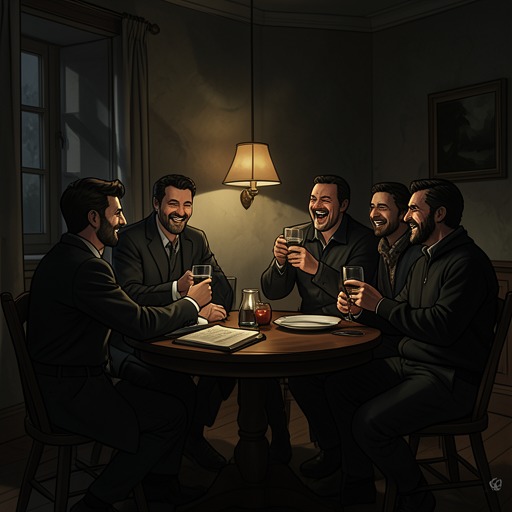
The preparations draw in the other patients, including Harding, Scanlon, and Sefelt, while Billy struggles to speak through his stutter. Turkle’s assistance helps create a brief, shared conspiracy inside the tightly managed ward. The scene also shows the limits of that secrecy: the group is still using the institution’s rooms, doors, lights, and staff shift changes, and each practical arrangement can expose them to supervision.
The Supervisor’s Inspection
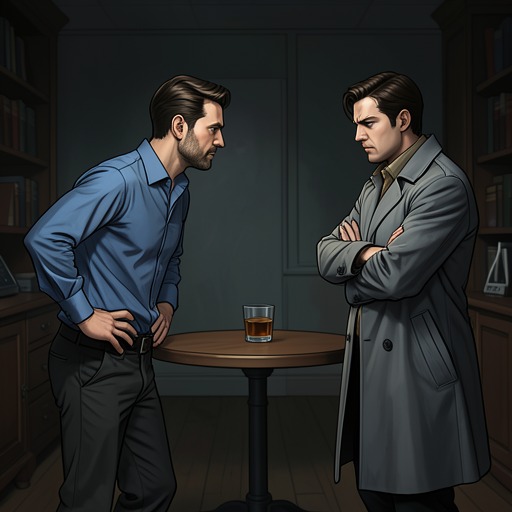
When the ward door sounds, Turkle fears that the supervisor has arrived to fire him. The patients crowd into the dark latrine while the supervisor searches and calls for him. McMurphy urges Turkle to go out and answer, since his absence would itself look suspicious. Turkle eventually slips into the hall and claims he has been cleaning and policing the ward. His explanation falters when the supervisor points out that the latrine—the place his job specifically requires him to clean—is the only area left dark.
This exchange makes Turkle’s complicity precarious. He is helping conceal the gathering, yet his explanation must still pass as ordinary work. Harding manages to distract the supervisor, who eventually leaves after declining an offer to return for another visit. The patients then congratulate Harding, while the bottle continues to circulate. Turkle has helped sustain the cover, but it is Harding who carries off this particular deception; the distinction prevents Turkle’s participation from becoming a claim that he controls the episode.
Afterward, the patients ask about mixing vodka with something from the ward. Turkle explains that only the supervisor has a key to the drug room. McMurphy persuades him to let the group try picking its lock, and Turkle works beside McMurphy with paper clips. While they attempt this, the women and the other patients search the Nurses' Station files. Turkle’s cooperation extends from arranging the gathering to joining an improvised attempt to bypass another institutional barrier, though the evidence does not establish that they successfully open the room.
Harding’s Escape Scheme
As the night continues, Dale Harding proposes a plan to get McMurphy off the ward. The patients would tie Turkle with strips of torn sheet and make it appear that McMurphy had crept up on him, taken his keys, broken into the drug room, scattered the drugs, disturbed the files, and escaped through the screen. The staged break-in would give Nurse Ratched a plausible explanation for the disorder while making McMurphy’s departure look like an escape rather than an authorized release.
Harding presents the plan as a way to protect the others from trouble with Nurse Ratched, preserve Turkle’s job, and give McMurphy a chance to leave. He suggests that the women could drive McMurphy to Canada, Tijuana, or Nevada, and argues that hospital escapees are not pursued very hard because most return within days, broke and drunk, seeking free lodging and meals. McMurphy calls the scheme absurd enough to work and praises Harding’s clear-headedness. The group discusses it, but the talk dies away; the proposal is not carried out in the evidence presented.
Turkle’s place in the plan is telling: his apparent victimhood would be part of the disguise, while the stated aim is to keep him employed. Yet the proposal is Harding’s, and nothing here establishes that Turkle knows of it or agrees to be tied up. His earlier assistance makes the scheme imaginable, but the text keeps the proposed deception distinct from his demonstrated actions.
Narrative Significance
Turkle’s brief appearances give the ward’s resistance a practical, comic texture. His nodding, bargaining, anxious fear of being fired, and willingness to work at the drug-room lock contrast with the rigid rules that shape the patients’ lives. He is neither a powerful rebel nor simply an obstacle: he can help create openings, but the supervisor controls the key that matters, and he remains accountable for his job.
Through Chief Bromden’s account, Turkle becomes part of a fragile nighttime alliance formed through favors, improvised excuses, and shared risk. His cooperation makes the ward feel briefly permeable, even as the need to hide in the latrine and explain the lights reveals how quickly that freedom can be challenged. The escape plan extends this pattern into a more ambitious possibility, but remains only a plan; Turkle’s clearest significance lies in the small, concrete ways he helps the patients act together within the institution.